The Physical Toll of Being a Woman in Finance
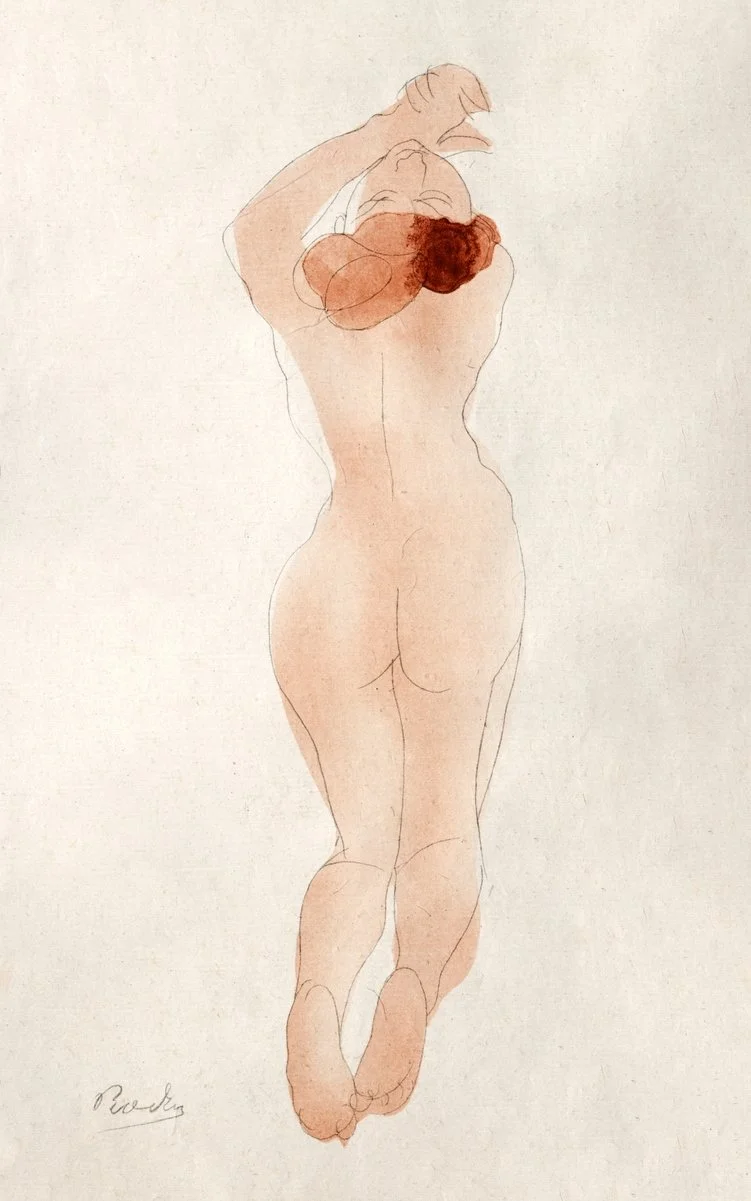
image: Caresse: moi danc, chéri by Auguste Rodin.
July 10, 2026
The Physical Toll of Being a Woman in Finance
"I felt sick every day. My stomach was hurting, my chest hurt." Said Stef, 37 as she describes her relationship with financial services as a love/hate affair she can't quite quit.
Stef's ambition is real. Her drive is relentless. She genuinely loves the pressure and the payoff of Wall Street, it's where she's thrived. But in her late 30s, she landed a boss who made her life untenable. And her body started breaking down.
Ambitious women are often drawn to finance because they shine under pressure. The industry rewards people who seek challenge and don't stop. But that same drive can keep them pushing long after their body starts begging them to slow down.
"I wear the Oura ring and it was flagging major biometric symptoms that told me — you're not well!" said Megan. "And I'm like, I'm not sick. This is just my state right now." She spoke to me while recovering before starting a new job, after an emotionally abusive boss left her with insomnia, weight loss, and hair loss.
Women in finance are burning out at higher rates than men and the gap between them is growing (McKinsey & Company, Women in the Workplace, 2023).
As a therapist who works with ambitious women in finance, I see this pattern constantly: severe physical symptoms tied directly to destabilizing, demoralizing, even emotionally abusive work environments.
Before private practice, I worked with firefighters and EMTs. Their job asks the body to repeatedly snap into fight-or-flight, that adrenaline surge that's supposed to help us handle a crisis. Over time, that constant adrenaline leaves firefighters with high rates of insomnia, panic attacks, chronic pain, and autoimmune disease.
I started noticing the exact same pattern in the women I see from the New York financial world. Their bodies were sending signal after signal that they were overworked and exhausted. And just like a firefighter is trained to run toward the alarm, these women were trained to override those signals. So they kept pushing through.
Lauren, 43, spent years at a finance firm where she faced gender discrimination and felt constantly targeted. Her body never got to stand down, even in sleep. “I was constantly having, I guess you could call them nightmares,” she said. “Replaying scenarios and trying to figure out how they were gonna try to get me.”
Here's the problem: fight-or-flight is built for short bursts, not for months or years. When stress doesn't let up, because of constant pressure, unrealistic deadlines, job insecurity, or 50-plus-hour weeks, the body never gets to rest. Eventually it stops keeping up. The result: fatigue, brain fog, poor memory, irritability. Stress-related illness expert Karen Heard compares it to a factory forced to run 24/7 with no downtime, eventually production falls off.
The women I work with often come to me when they're no longer willing to live like this. They talk about missing parts of themselves: a life outside of work, a body that can actually rest, time enjoying their kids.
I want you to ask for more. You can love your job and have a nervous system, a body, and a life that are healthy and thriving
3 things you can do right now if your job is giving you physical stress:
Move gently, not harder. Stress tempts us to push through or shut down completely. Try walking, stretching, swimming, or dancing in your kitchen, anything that brings you back into your body. The goal is reconnection, not performance.
Find one good thing, right now. A photo. A patch of sunlight. Something cooking on the stove. Pause and actually feel it. Notice what shifts: a fuller breath, softer shoulders, a small smile. Do this once a day. It's not trivial, it's quietly teaching your nervous system to settle.
Get real support. Your symptoms are the real, measurable cost of long-term stress. They deserve more than an app and a long weekend. Look for a therapist trained in how stress lives in the body: Somatic Experiencing, EMDR, Sensorimotor Processing, or Creative Arts Therapy. For many people, this is what finally makes them feel like themselves again.
Some names and identifying details have been changed to protect interviewees’ privacy.
Jessie Cozza, LCAT, is a New York–based therapist in private practice specializing in supporting ambitious women through toxic dynamics. Learn more at jessiecozzatherapy.com.
